by Andrea Watson | October 11, 2020
The Way
Daoism is rather like a collection of beliefs and concepts from ancient Chinese culture. This religion focuses on the observation of and unity with nature as well as health and longevity and meditation and trance. It is possible that many influences contributed to Daoism, including the appreciation for heretic life as well as Shamanism. The emphasis on harmony with nature is typical of Eastern religions (Molloy, 2013).
Laozi
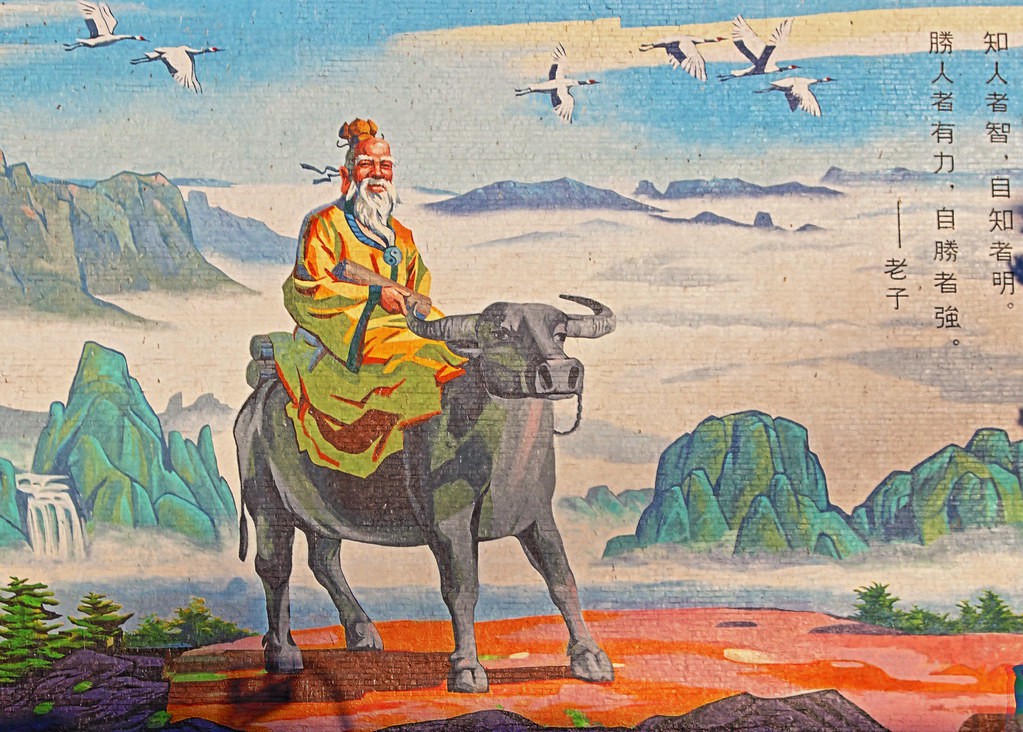
“Mastering others is strength. Mastering yourself is true power.”
-Laozi
Laozi is a legendary figure said to be the founder of Daoism. He was an esteemed scholar who spent time discussing philosophy with people and was said to be an “old child”. At one point in his life, he was prompted to write down his teachings before he was allowed to cross the western border of China. What he wrote became known as the Daodejing (Molloy, 2013).
Dao De Jing
The Daodejing written by Laozi is a poetic collection which is the central scripture in Daoism. The work may have served many functions, including being used in leadership and politics, as a guidebook for rulers, and as a spiritual guide for followers. There are eighty one chapters to the book, some of which allude to shamanistic elements. The interpretation of the Daodejing is dependent upon the reader, and there have been many different translations and interpretations of the writing. The book speaks of the Dao, meaning “the way”. It speaks to the nature of the Dao and its operation as well as suggestions on experiencing the Dao (Molloy, 2013).
Zhuangzi
Zhuangzi added an element of humor and lightheartedness to Daoism, enriching the religion overall. The man was a writer of whimsical stories which continued the themes of early Daoist thought. His writings convey playfulness and independence. Zhuangzi rejected all barriers, being in love with the fantastic (Molloy, 2013).
“I dreamed I was a butterfly, flitting around in the sky; then I awoke. Now I wonder: Am I a man who dreamt of being a butterfly, or am I a butterfly dreaming that I am a man?”
-Zhuangzi
Basic Teachings
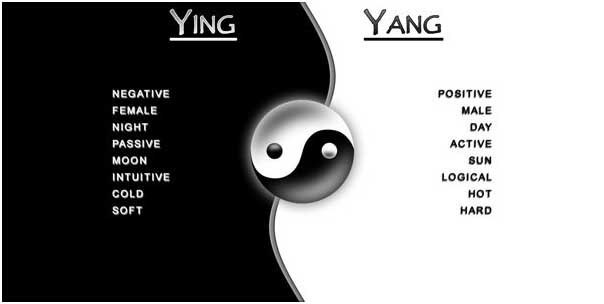
There are several basic teachings of Daoism. First is the Dao, or the way, which is nameless and unknowable. The Dao is the mysterious reality we all live in, the way nature expresses itself. Although we cannot know or name it, we can do our best to be in harmony with it. Wu wei is another important concept which means “no action”. It is the ideal of effortlessness; doing nothing on purpose. This ideal is a model of balance and harmony which is the way nature unfolds and accomplishes things without strain. Simplicity is an ideal as well. Giving up what is unnecessary, including formal education and appreciating what is ordinary as the way to attain simplicity. Gentleness is valued, and weapons and war are hated. Daoists also believe it is important to look beyond the apparent opposites of good/bad, as people see things from a limited point of view (Molloy, 2013).
Common Characteristics
There are elements that Daoism shares with all religions on a basic level, including the effort toward reconnection with the divine, a belief system, expression through art and other materials, a sense of what is sacred, ethics and rules for behavior, and a community of followers. Also, Daoism shares common characteristics with certain specific other religions, including the reverence for nature common in Eastern religions. There is also meditation and trance, which we find in Buddhism and Hinduism as well as others. Interestingly, Daoism involves no creator God, and neither does Jainism. Daoists value kindness and honor divinity, as do many other religions (Molloy, 2013).
Ecology
As the world at large is tossed to and fro on the tumult of ecological crisis, Daoism responds. The Chinese Daoism Association is promoting an agenda to construct “green Daoism” . This is being done in support of scientific development in an effort to contribute to the sustainability of China. By taking on this burden of social responsibility, Daoism is offering philosophical insight and ecological wisdom to address the multifaceted crisis (Miller, 2013).
Interfaith Dialogue
Advances in technology allow people all around the globe to engage in interfaith dialogue online. There are many sites dedicated to create a new virtual spiritual space where this dialogue can take place (McCarthy, 2007).
Roles of Women
Female practitioners of Daoism have historically acted in roles such as nuns, abbesses, and founders of monasteries. Some women have even risen to leadership within Daoism. In the twelfth and thirteenth century this was especially important, when they established monasteries, led congregations, performed rituals, and trained disciples. The roles of women in Daoism have largely unexplored even though they have been major contributors to the Daoist community at large (Chaos, 2008).
Eastern Religion and Ethics
Through contemporary art and scholastics, Eastern religious beliefs and ideals are gaining a wider audience. Family relationships, harmony with nature, social responsibility, and acceptance are ethical concepts found in Eastern religions that are relevant in the modern world and gaining in influence through heightened exposure (Molloy, 2013).
References
Bai, X., & Morris, N. (2014). Leadership and virtue ethics. Public Integrity, 16(2), 173-186. doi:10.2753/PIN1099-9922160205
Chao, S. (2008). Good career moves: Life stories of daoist nuns of the twelfth and thirteenth centuries. Nan nü, 10(1), 121-151. doi:10.1163/138768008X273737
McCarthy, K. (2007). Interfaith encounters in america. Retrieved from http://ebookcentral.proquest.com
Miller, J. (2013). Is green the new red? the role of religion in creating a sustainable china. Nature + Culture, 8(3), 249-264. Retrieved from https://search.proquest.com/docview/1620227313?accountid=458
Molloy, M. (2013). Experiencing the world’s religions: Tradition, challenge, and change (6th ed.). New York, NY: McGraw-Hill
 Life All Day